
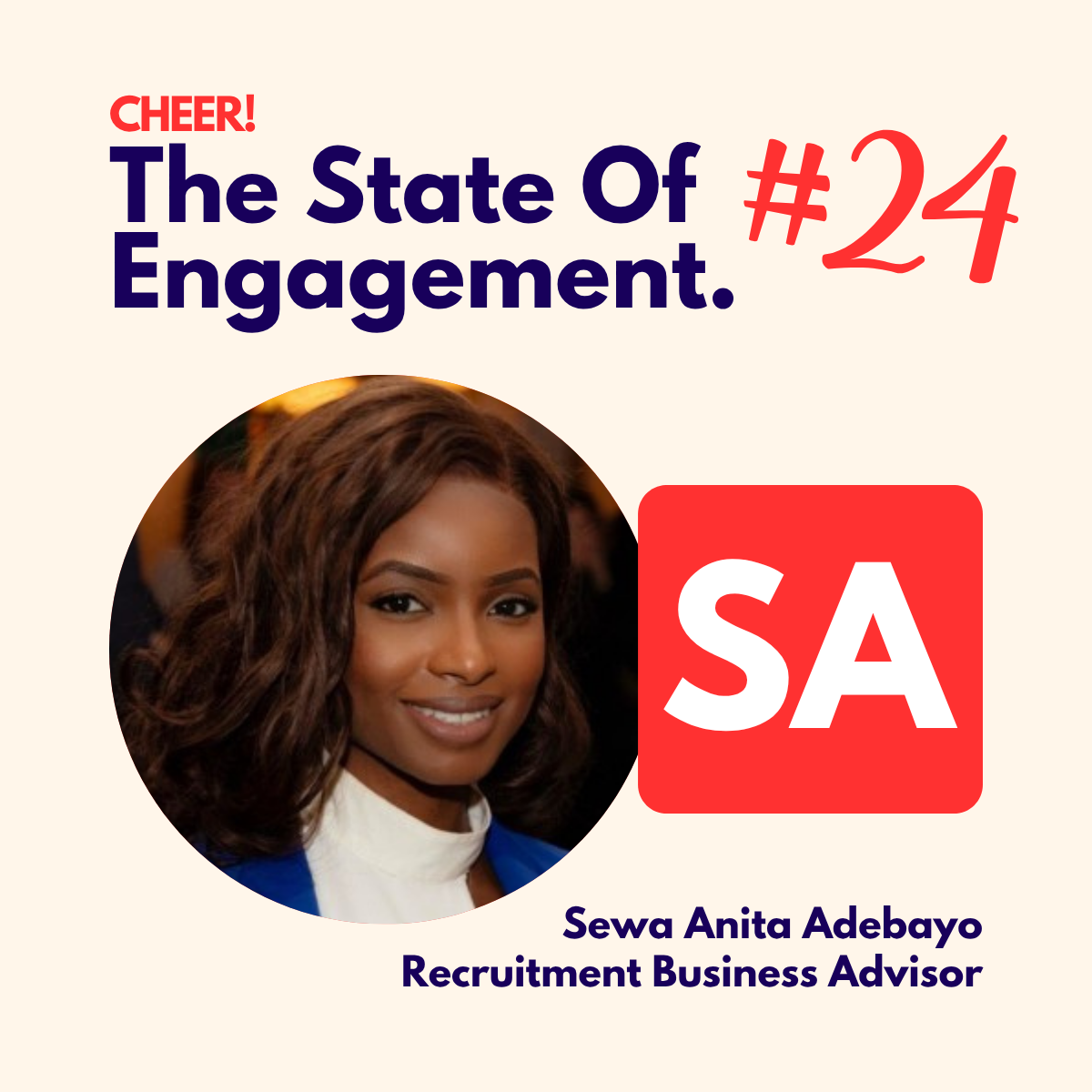
The State of Engagement: Sewa Anita Adebayo
This edition of The State of Engagement is with Sewa Anita Adebayo, an HR and Recruitment professional who believes that retaining talent starts with the candidate experience.
For Sewa, the recruitment process is about much more than filling vacancies. Every candidate forms an opinion about an organisation based on how they are treated, whether they are successful or not.
In opening, Sewa begins “that opinion influences not only whether they accept an offer but also how they speak about your company to others. A positive candidate experience strengthens your employer brand, while a poor one can damage your reputation and discourage future applicants.”
What engages employees?
“For me, employee engagement starts with creating an environment where people feel valued, trusted, and empowered to do their best work”, says Sewa, “while competitive salaries are important, lasting engagement comes from feeling that your contribution matters.
“Employees perform at their highest level when they understand how their role contributes to the wider business strategy and when leaders communicate openly about organisational goals. Recognition also plays a significant role, not only celebrating major achievements but acknowledging everyday contributions that drive success.
I also believe flexibility and autonomy are key. When people are trusted to make decisions, encouraged to develop new skills, and given opportunities to grow, they become more invested in both their own success and the success of the organisation.
Another thing to note is that engagement begins before employment. A positive candidate experience establishes trust from the outset, making new hires feel welcomed, informed, and excited to contribute from day one.”
In your experience, what are employees looking for?
Sewa believes employees are looking for much more than a salary. They want purpose, flexibility, growth, and a genuine sense of belonging.
“Increasingly, people want to work for organisations whose values align with their own. They want leaders who communicate honestly, workplaces that embrace inclusion and diversity, and cultures where wellbeing is prioritised rather than treated as an afterthought.”
Career development is another major factor, explains Sewa. “Employees want to see clear progression pathways, access to learning opportunities, and confidence that their employer is invested in their future.
Flexibility has also become an expectation rather than a benefit. Whether that’s hybrid working, flexible hours, or simply recognising that people have responsibilities outside work.”
Ultimately, employees are looking for an employer that treats them as individuals, not just resources. When organisations consistently deliver on the promises made during recruitment, they’re far more likely to retain talented people over the long term.
Which part of EVP matters most to you personally?
EVP, or Employee Value Proposition, is the balance of what people give and what they get back. I like to break it down into seven pillars:
Brand & Purpose, Culture, Environment, Monetary, Prospects, Relationships, and Wellbeing.
Sewa goes with where a majority go, Culture.
“Culture influences every aspect of the employee experience. It shapes how people collaborate, how leaders support their teams, how decisions are made, and whether employees feel psychologically safe to contribute ideas and challenge thinking.
A positive culture creates an environment where people feel respected, included, and motivated. It strengthens relationships, supports wellbeing, encourages learning, and enables career growth. In many ways, culture is the foundation upon which all the other EVP pillars are built.”
As a recruitment professional, Sewa has seen first-hand that organisations with strong, authentic cultures not only attract exceptional talent but retain it. Candidates can often sense whether a culture is genuine during the recruitment process, which is why creating a positive candidate experience is so important to her. “Recruitment isn’t just about filling vacancies; it’s about introducing people to a culture they’ll want to be part of for years to come.”
Retention begins at Recruitment!
For Sewa, employee engagement and talent retention begins with the experience a candidate has throughout the recruitment process.
The promises made during recruitment need to match the reality of working for the organisation.
Culture sits at the centre of that experience for Sewa, but it only works when people can feel it in practice. From how candidates are treated, to how employees are trusted, supported and developed, every interaction contributes to the experience of working for an organisation.
As Sewa puts it, recruitment isn’t just filling vacancies. It’s about introducing people to a culture they’ll want to be part of for years to come.
Connect with Sewa on Linkedin
Contact CHEER!
Click here for past editions of The State of Engagement
Want to improve engagement in your own organisation? Find out how our employee engagement consulting can help.