
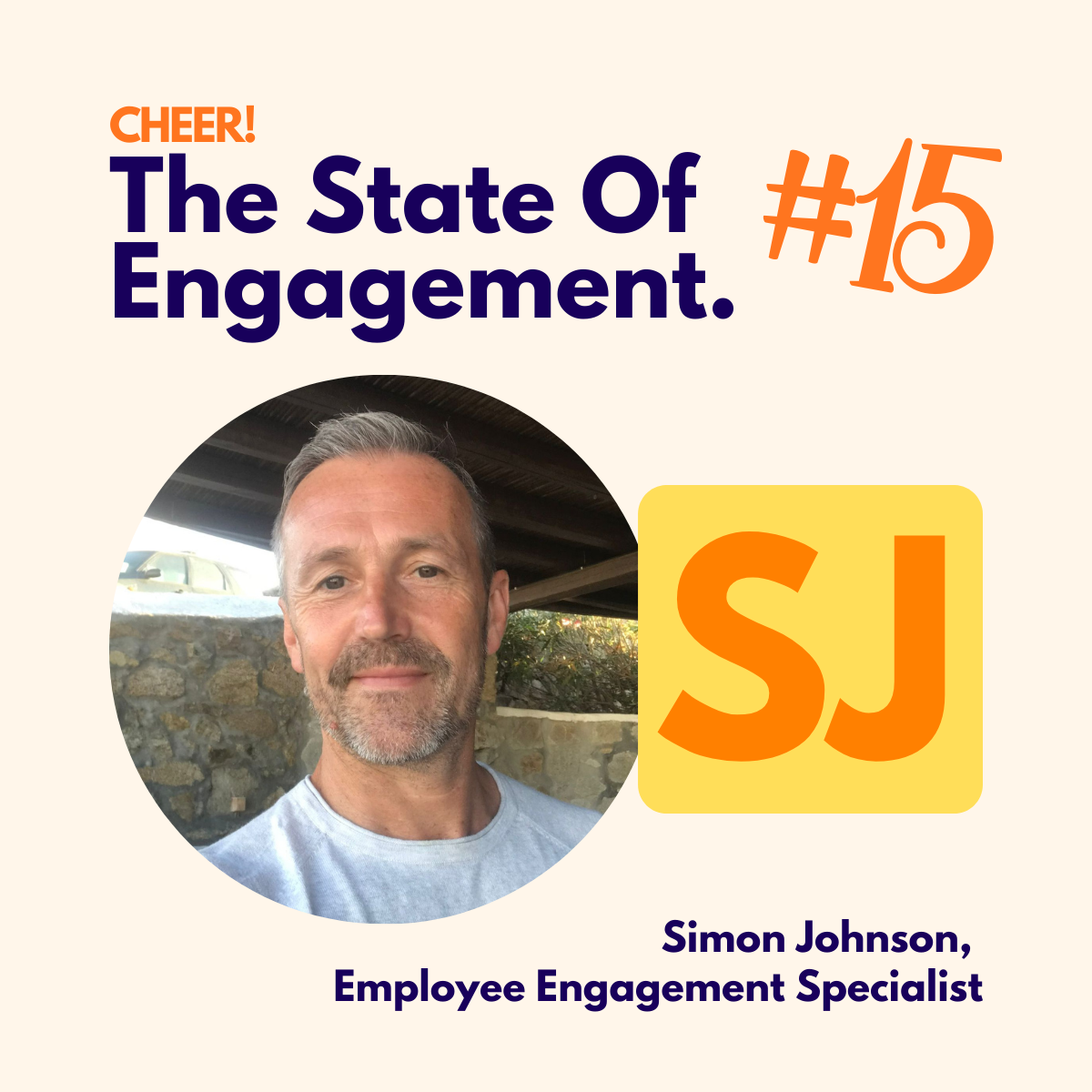
The State of Engagement:
Simon Johnson
Simon is an employee engagement and culture specialist who works with organisations of all sizes to turn employee feedback into meaningful action. With a background in senior leadership, he brings commercial credibility and a practical approach to helping executive teams strengthen culture, build trust and improve performance.
Alongside his work with organisations, Simon also provides one to one executive coaching, supporting leaders who want to create lasting cultural change rather than quick fixes.
In our conversation, Simon shares his views on what really engages employees, what organisations get wrong when attracting talent, and why culture and relationships still sit at the centre of a strong Employee Value Proposition.
Cheers,
Joe
ps – we didn’t have any videos of Simon, so added a couple of videos of another Simon talking about Culture!
What engages employees?
Simon believes engagement starts with values, but only if they genuinely shape how people behave day to day.
Too often, organisations publish values that look impressive externally but have little influence internally, and when that happens, they quickly lose meaning.
He explained that engagement improves when employees are involved in shaping those values and when leaders consistently demonstrate them in practice.
“If people can see the values in the way decisions are made and how colleagues treat each other, it creates clarity, and people start to give their best.” – this took me back to the very first TSOE post with Leon from We Are Adam, who put values on the wall, but also into ACTION.
Simon also spoke about the importance of organisations creating meaningful ways for employees to share their views, but ensuring that feedback leads to visible action.
“Many organisations ask employees for their opinions through surveys, listening groups or forums, but if people don’t see anything change as a result, engagement quickly fades. Employees want to know their voice is genuinely heard and that it makes a difference.”
What gives businesses the edge in attracting and retaining talent?
Simon feels many organisations still limit themselves by focusing too heavily on traditional credentials. He has seen strong candidates overlooked simply because they didn’t have the expected degree or background, despite having the mindset and capability needed to succeed.
For Simon, organisations gain an advantage when they widen their thinking about where talent comes from and place greater emphasis on attitude, potential, experience and alignment with values.
In your experience, what are employees looking for now?
We spoke at length about this, but what it boiled down to for Simon was simple.
Employees want to feel respected and treated fairly.
Simon also emphasised the importance of people feeling that they genuinely belong within an organisation.
He explained that engagement increases when employees can see people like themselves represented across the organisation, including in leadership roles.
“When people look at senior teams or boards and can see a version of themselves reflected there, whatever their background or life experience, it sends a powerful signal that they belong and that opportunities are genuinely open to them.”
He reflected on experiences where people had impressive qualifications and expertise, but the way colleagues interacted with each other did not reflect that professionalism.
“When the everyday culture isn’t right, even very talented teams struggle to stay engaged.”
What I loved about our conversation (which went 45 minutes over the 30 minutes planned, I might add) is that he’s not afraid to have the difficult conversations when attitudes aren’t right, when people aren’t behaving in ways that uphold values, or when colleagues aren’t being treated with respect.
He’s someone who would laugh at the “You can’t say that” types he might meet. Often those same people later recognise where they weren’t in alignment, and it shows how employee engagement can sometimes involve holding up a mirror to behaviours in order to improve them.
Which part of EVP matters most to you personally?
EVP, or Employee Value Proposition, is the balance of what people give and what they get back. I like to break it down into seven pillars:
Brand & Purpose, Culture, Environment, Monetary, Prospects, Relationships, and Wellbeing.
For Simon, culture and relationships sit at the centre of everything.
He explained that organisations can offer competitive pay, strong benefits and career opportunities, but if the environment does not feel supportive or respectful, those advantages quickly lose their impact.
Culture shapes how people experience work each day, and relationships determine whether people feel valued and supported.
What do you see are the biggest people challenges businesses are facing right now?
We were going so well, we’d avoided those two letters (AI), but I raised this topic as it’s unavoidably impacting engagement, and Simon agreed that ensuring engagement remains a priority while organisations focus heavily on technology and transformation is a real challenge.
Artificial intelligence, automation and new tools dominate many business conversations right now. While these developments are important, Simon believes they should not distract leaders from focusing on people.
He believes the organisations that succeed over the coming years will be the ones that balance technological progress with a continued focus on employee experience.
Summary
Throughout the conversation, Simon returned to a consistent theme: culture only works when it is visible in everyday behaviour.
He suggested a simple test: Do employees actually know the organisation’s values, and do they see them reflected in leadership behaviour and everyday decisions?
If people cannot recognise them in how leaders act and how decisions are made, then the work of building culture has not truly started. Simon believes (and I agreed) that the companies that succeed will be the ones that keep people at the centre of their thinking.
Thanks Simon!
Reach out to Simon on Linkedin
Contact CHEER!
Click here for past editions of The State of Engagement