
Engagement Technique: Stop, Start, Keep
One of the lines you’ll see used regularly on CHEER! is ‘Leverage what your people love, fix what they don’t’ – it’s about understanding what’s working, leaning into it, while you sort out everything else.
You might not have the time or resource right now to run a full EVP – Employee Value Proposition – which is why you should contact me to do that, so what could you do right now, that would take hardly any lift? What about Stop, Start, Keep?
It’s not a ground breaking technique this one, it’s been used for years – often labelled ‘Stop, Start, Continue’, typically as part of performance reviews. In some areas it’s been criticised, but I believe it’s a straightforward way to find out what’s working and what isn’t, so you can use it for conversation.. for engagement!
How it works
Ask a team or individual to reflect on three questions:
- Stop: What should we stop doing because it isn’t helping?
- Start: What should we start doing that could improve things?
- Keep: What should we continue doing because it works well?
It creates a balanced conversation. Without the Keep section, feedback can feel negative. Without the Stop section, improvement can stall. Without the Start section, ideas never move forward.
If the employee doesn’t have an answer for all 3, that’s ok. It’s about giving them an opportunity to have their say.
You could do this in a 1-2-1, include it as part of performance review, maybe add it as part of your request for feedback on a certain topic – I prefer it to be a more ‘general’ question, more ‘thumb in the air’ than detail, and a ‘request’ rather than an expectation of employees.
Why it works
Stop Start Keep improves engagement because it gives people a voice in how work happens. Employees are often closest to the problems that slow teams down. This exercise creates a safe way to surface those frustrations while focusing on practical improvements. It also builds ownership. When teams identify changes themselves, they are more likely to follow through.
Another benefit is psychological safety. The format encourages balanced feedback (rather than criticism, or an anonymous attack!)
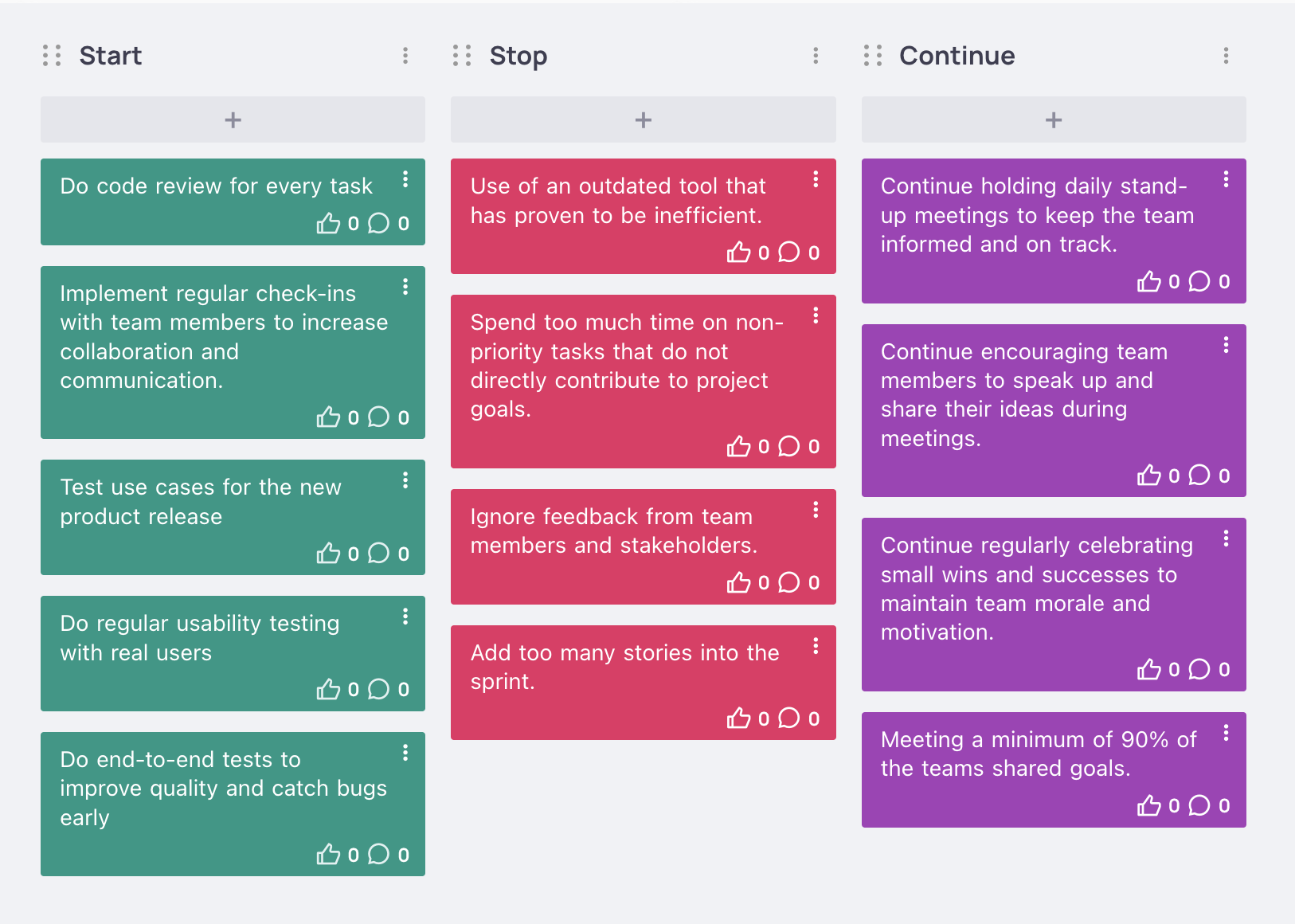
Examples
Here are some typical responses that appear in teams.
What to watch out for
Keep it short and human. This isn’t a CV or personality test. A few other things to consider:
- Don’t let the exercise become a complaint session. Keep the focus on improvement.
- Avoid collecting too many ideas. A handful of clear actions is far more effective than a long list.
- Finally, revisit the exercise later. Checking progress shows that employee input leads to real change.
It doesn’t require complex facilitation or tools. Just three questions that encourage reflection and improvement.
Useful Links / Further Reading:
Atlassian team retrospective guide (Stop Start Continue)
MindTools explanation of Stop Start Continue
Parabol retrospective explanation
This post is part of our Engagement Techniques series of practical, low-cost ideas to bring more connection and meaning into work. Find the rest here
👉 Want to explore techniques like this in more depth? I run interactive employee engagement workshops where we bring these ideas to life.