
The State of Engagement:
Laura Weaving
CEO, Perform
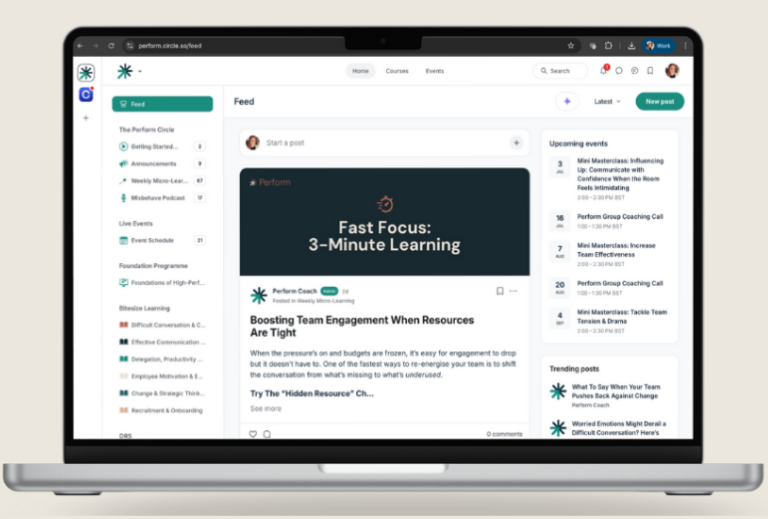
Perform is a manager performance platform that helps organisations turn behavioural insight into everyday management action.
They understand that engagement is a behavioural outcome, rather than a perk-driven one, which is why I was keen to meet with their CEO (and co-host of the wonderful Misbehave Podcast), Laura Weaving.
They work with Heads of People and operational leaders in sectors like professional services, construction, engineering and tech to build confident, capable middle managers at scale, and do this by combining behavioural data, in-the-moment coaching and bite-sized learning to help managers move from good intentions to consistent execution.
What engages employees?
According to Laura and Perform, teams aren’t created by policies – they’re created by how managers show up and lead every day.
“We believe engagement is a behavioural outcome, not a perk-driven one”, she explain, “People are most engaged when three things are consistently present:
1. Clear expectations
2. Regular, honest conversations
3. A manager who adapts their approach to the individual, not just the role
In our client work, the biggest engagement shift rarely comes from new initiatives – it comes from managers learning how to communicate more clearly, coach in the moment, and hold standards without damaging trust. When managers become behaviourally aware, they stop using a one-size-fits-all approach. That’s when you see real engagement: people feel understood, challenged appropriately, and confident about what good looks like.”
What gives your business the edge in attracting and retaining talent?
“Consistency of management”, Laura put, plainly.
“Candidates increasingly look beyond brand and benefits and ask, “What will my day-to-day manager actually be like?”
Organisations that stand out are the ones where management quality isn’t dependent on personality or tenure. Instead, there’s a shared standard for how managers communicate, develop people and handle performance. When candidates hear consistent stories from employees about clear direction, supportive challenge and fair accountability, that becomes a genuine competitive edge”
Which part of EVP matters most to you personally?
EVP, or Employee Value Proposition, is the balance of what people give and what they get back. I like to break it down into seven pillars:
Brand & Purpose, Culture, Environment, Monetary, Prospects, Relationships, and Wellbeing.
Laura recognises that – while all seven pillars matter – the the one that most directly shapes day-to-day engagement is Relationships and specifically, the relationship between a manager and their team.
For Perform, that relationship acts as the translator for every other pillar. A strong culture, compelling purpose or attractive benefits package can all be undermined if the immediate management experience is unclear or inconsistent. When the manager–employee relationship is built on clarity, trust and constructive challenge, the rest of the EVP becomes far more tangible and believable.

^ Laura with Sarah Callender, Hosts of The Misbehave Podcast
What do you see are the biggest people challenges businesses are facing right now?
Laura says, “Across the organisations we work with, the most common challenge is not a lack of engagement initiatives, but a gap in everyday management capability. Many managers care deeply about their people but haven’t been shown how to:
- Adapt their style to different behavioural drivers
- Address underperformance early and constructively
- Reinforce positive behaviours consistently
- Translate organisational goals into clear, motivating expectations
As a result, HR teams often end up firefighting engagement issues that are actually rooted in inconsistent management behaviour. What we’re focused on improving is helping managers move from reactive to intentional, so engagement isn’t something measured once a year, but something actively shaped in weekly conversations and decisions.”
I’ve had previous conversations in this series around the gap in management skills and/or behaviours. Whether the reasoning is attitude, a demand for unsustainable performance, a generational gap, or anything else, I have a degree of empathy as it’s not always the managers fault, but if more leaders took accountability, engagement would certainly improve.
Follow Laura on Linkedin
Understand more about Perform on their website
Listen to The Misbehave Podcast on Apple or Spotify
Contact CHEER!
Click here for past editions of The State of Engagement