
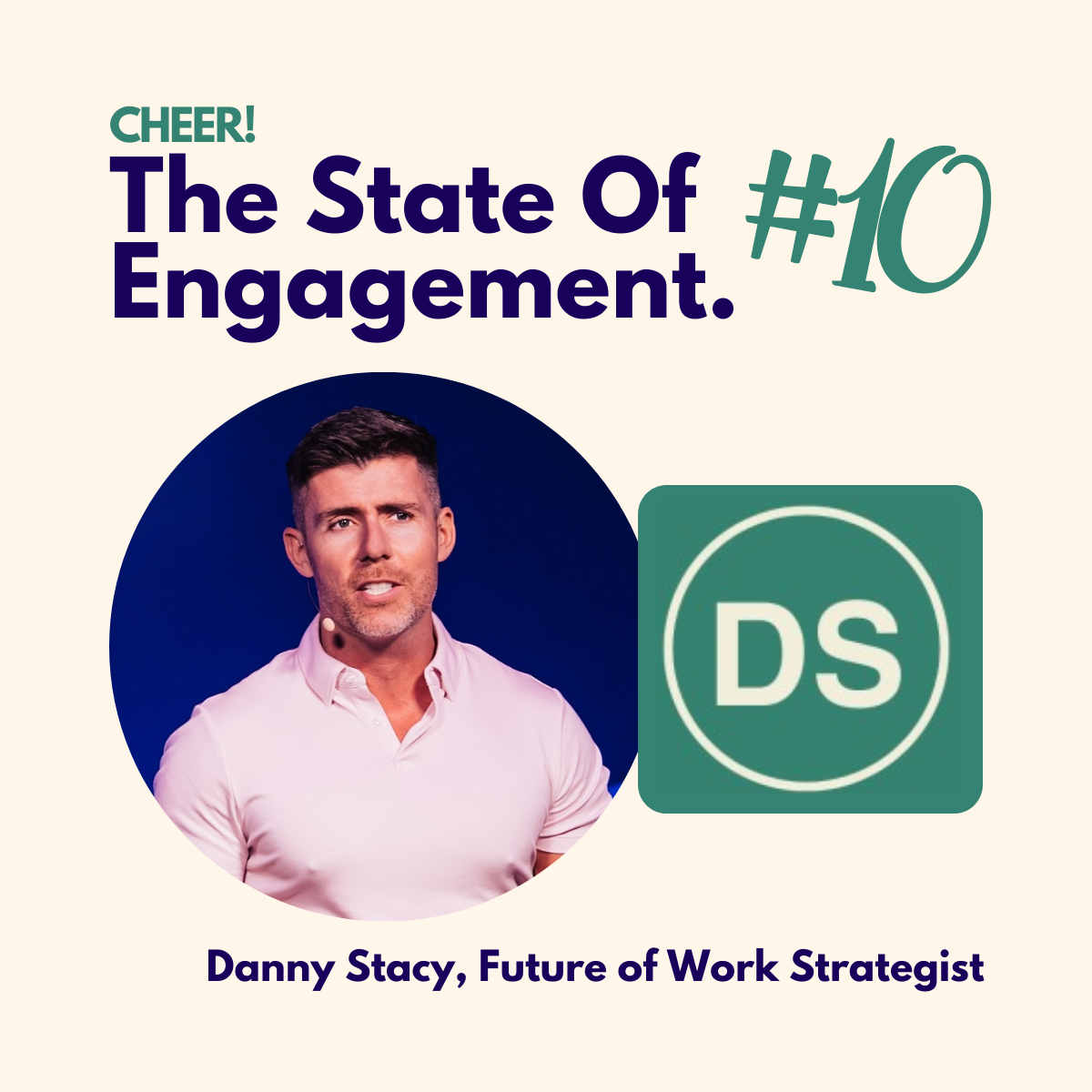
The State of Engagement:
Danny Stacy
Future of Work Strategist
This edition of TSOE is with a global Future of Work strategist, speaker, and facilitator with almost two decades of experience in talent, HR, and organisational strategy.
Here, we spoke all things EVP and Engagement. Read on for another fantastic insight.
Engagement can often treated as a motivation or mindset issue. Where do leaders most misunderstand the real causes of disengagement?
Most disengagement I see has very little to do with motivation and a lot to do with misaligned systems. Leaders often assume engagement is about energy, attitude, or incentives. In reality, it is a reflection of how work is designed, how decisions are made, and how consistently the Employee Value Proposition shows up under pressure.
If your EVP promises autonomy but decision-making is tightly controlled, or it talks about wellbeing while workloads quietly escalate, people disengage not because they lack commitment, but because trust erodes. Engagement is not something you “drive” into people. It is what you get when the lived experience of work matches the expectations you set. Leaders would do better to stop asking “how do we motivate people?” and instead ask “where does our EVP break down in day-to-day reality?”
Wellbeing has never been talked about more, yet many employees feel exhausted or burned out. What are organisations getting wrong?
Most organisations still treat wellbeing as a support function rather than a performance lever. They invest in tools, policies, or perks designed to help individuals cope, while leaving the underlying causes of overload untouched. That creates toxic resilience, where people are praised for enduring pressure rather than protected from unnecessary strain.
From an EVP perspective, wellbeing is not about what you offer when people are struggling. It is about how work feels when things are busy, ambiguous, or changing. Sustainable performance comes from clarity, prioritisation, realistic capacity planning, and leaders who model boundaries rather than quietly reward burnout. Many wellbeing issues are not personal resilience gaps. They are design flaws.
You talk about empathetic resilience. How does this differ from traditional resilience thinking, and why does it matter for engagement?
Traditional resilience asks individuals to adapt to systems that may already be broken. Empathetic resilience asks organisations and leaders to take responsibility for the conditions they create.
My work focuses on building capacity rather than endurance. That means designing roles, expectations, and leadership behaviours that allow people to perform consistently without running at full stretch all the time. People are far more engaged when they feel seen, trusted, and protected from avoidable pressure. Empathy here is not softness. It is a strategic capability that helps organisations retain energy, focus, and commitment over the long term. Engagement declines fastest in cultures that confuse constant urgency with high performance.
The role of HR and TA is evolving. What do People leaders need to let go of to have greater influence on engagement and EVP?
HR and TA leaders need to move beyond transactional execution and into systems stewardship. Engagement cannot be fixed through initiatives alone. Real influence comes from shaping how work is structured, how skills are developed, how performance is measured, and how EVP is experienced across the employee lifecycle.
This includes shifting towards skills-based hiring, designing career pathways that reflect how work is changing, and treating EVP as a lived contract rather than a branding exercise. The most effective People leaders I work with are those who are comfortable challenging leaders when the reality of work no longer matches the story being told.
Looking ahead, what shift do organisations need to make if engagement is to improve rather than decline?
Organisations need to stop treating engagement as a sentiment metric and start treating it as a design challenge. That means redesigning work for humans, not just for output. Integrating wellbeing into performance expectations. Using AI to support people rather than accelerate pressure. And being honest about what the EVP truly offers in a world of constant change. Engagement will improve when organisations accept that sustainable performance is not a nice-to-have. It is the only viable strategy left.
Danny Stacy helps senior leaders and HR teams navigate the evolving world of work, focusing on talent strategy, leadership, wellbeing, and human sustainability.
Previously at Linkedin and Indeed, he brings a systems-level perspective and practical guidance to help organisations align their Employee Value Proposition with day-to-day reality, turning engagement from a metric into a lived experience.
Follow Danny on Linkedin
Check out Danny’s website
Contact CHEER!
Click here for past editions of The State of Engagement